Hello, hello! It’s been about 10 months since my last update, but that’s also because I spent most of that time either working on the second draft of a novel (it’s done! I even like it!) or contending with a very weird and frustrating health issue that started with heartburn and ended with a bad case of sciatica that overall really threw me off my stride. Two endoscopies, some anti-fungals, the entire array of possible acid controller medication, and months of PT have me almost back to normal. I’ve got a few upcoming follow ups for lingering swallowing issues and my usual annual gut maintenance checks, and in all I’m grateful for Pepsid, pharmacogenomic testing, nearly the entire medical team I worked for nearly six straight months, my massage therapist, and my bandmate’s acupuncturist. It truly took a village and I’m back to running regularly (which honestly helps so much with all the middle-aged woman brain and sleep stuff that comes with the privilege), eating and drinking mostly normally, and slowly picking away at various wriring projects.
Since it’s been so long, let’s work backwards!
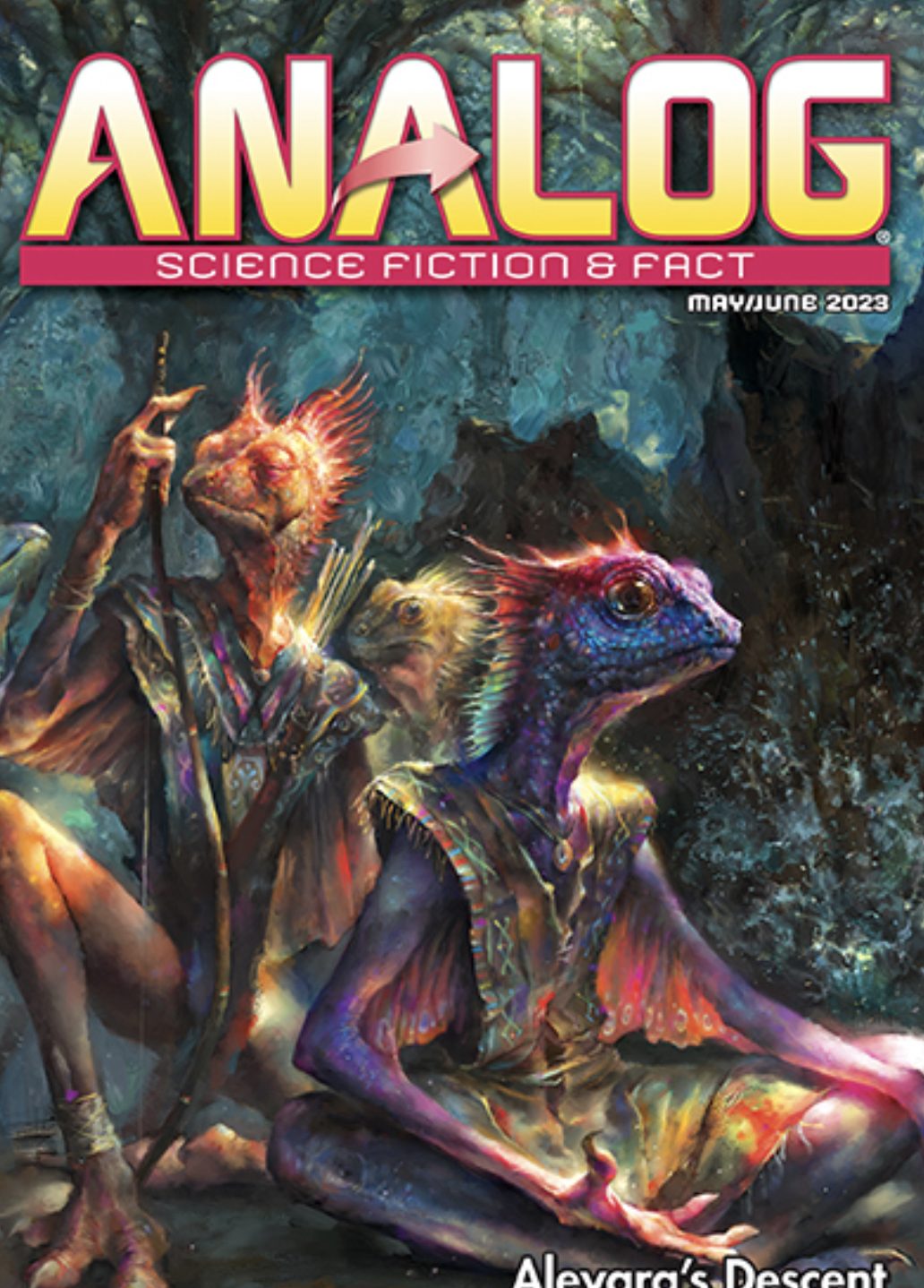
I’ve got some new writing in the world! I had the opportunity to interview Adrian Tchaikovskey earlier this year about Alien Clay and the conversation was too good to only pick and choose a few quotes from for an essay (in the latest September/October issue of Analog!) on his novel, the symbiotic origin of eukaryotes and Thomas Kuhn’s The Strucutre of Scientific Revolutions, which I first had to read in high school. The results are the third part of my ongoing Science Fact articles for Analog on the origins of life on earth, and this Q&A with Adrian Tchaikovsky, which you can read here on Analog’s companion blog. Here’s an excerpt:
KL: I had an entertaining conversation, long ago now, with Geoff Ryman about whether or not science in science fiction needs to be accurate. He took the line of, first and foremost, the story needs to be entertaining. It’s something I’ve thought about a lot since then, like what amount of detail is appropriate. You could have all the detail but then the space you can play in narrows significantly, but within them, you might find additional creativity.
AT: My take on that would be I get extremely annoyed when there is a big blockbuster film, and it’s all very spectacular, but the plot doesn’t make sense. Because the thing is, those are not the opposing poles of a magnet.
You can have a plot that makes sense. It will cost you a tiny fraction of what your special effects budget is. It’s not going to make your film more expensive. It’s not going to take anything away, but you can have sense as well as all the other stuff. It is a vastly undervalued thing in certain types of film.
Similarly, if you’re writing in that hard science fiction sphere, and really only if, I don’t think getting the science right will detract from anything. It will just mean that for other people who know the science, it will make them happier. In the same way as if you’re writing a historical book, getting the historical period right is important to a small but significant portion of your readership who will not like the book if you get it wrong. There’s also the point that if you can convince your readership that the science is solid, the book can have a much more significant impact.
Worldcon was up in Anaheim a couple weeks ago and I had a great time being on paneling for the first time. I really enjoyed my panels on science communication and poisonous plants, and even moderated my first panel on building fantastic ecology. I couldn’t have asked for better first panel experiences, and my thanks go out to everyone involved.

I also got to spend a lot of meatspace time with my writing group and ran into lots of folks I don’t get to see all that often, and hang out with the fine folks at Shiraki Press and their stable of inaugural writers (Lauren included! Check out her new novella Accelerated Growth Environment!). In all, it was one of the better Worldcons.

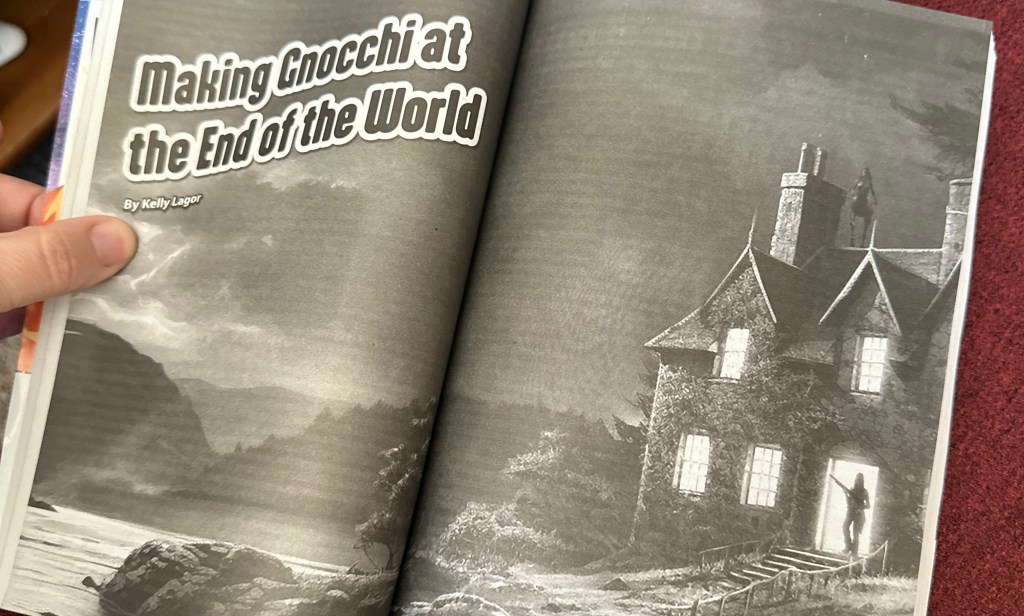
I’ve also had a couple more essays in Asimov’s, including one in the current issue on Alien called “The Haunting of the Nostromo.” I quite enjoyed writing this one, as Alien is one of my favorite horror movies of all time, and I paired it with an examination of capitalism and the Jospeh Conrad novel which gave the ship in Alien its name.
Please also consider, if you have any means at all, to contribute to the GoFundMe Sheila William’s daughter’s have opened for both their parent’s care. Sheila had a major health setback at the end of last year, and even though she was so busy with everything that came from being the editor of Asimov’s, she’s always been so generous with her time. I seriously cannot thank her enough for giving me a chance to become a regular contributor to the magazine, helping me develop more as an essayist.
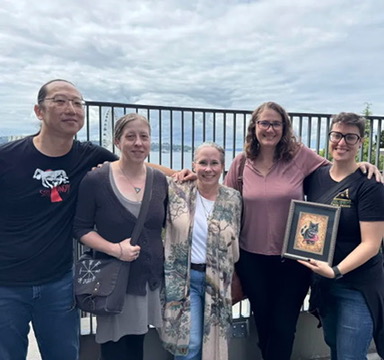
Rainforest was, as always, a delight. I gave my first craft talk on writing nonfiction, which came together really well. Enjoy this picture of us Bruisers on the lakeshore.

In fiction news, I’ve got a couple stories in circulation, but my main focus was finishing the second draft of my Lynchian hard SF/horror novel, which I wrapped up at the beginning of summer. The relief has been palpable (as I had to take nearly four months off from nearly all writing during all the dumb health things), and I’m excited to get back to it once I get through the last few essays I need to get done for the year, and my annual contribution to my partner’s Youtopia project, Stay Salty (a newspaper-zine-thing which everyone from my camp contributes to). This year’s short short will be a fun exploration of Black Rock desert’s geological history, an homage to Journey to the Center of the Earth, and our “death-by-a-thousand-cuts” supscription/fee everything growth economy.
Hang in there, as it’s only seems to be getting dumber, hotter, and more frustrating out there.