Why I Run

[Warning: contains lots of fitness and weight-related things]

For any of you who might follow me on Twitter, you might have noticed the daily exchanges with Elizabeth Bear, Fran Wilde and Sarah Goslee (and also occasionally Kyle Cassidy) about exercise-related things, and you might have wondered what that’s about.

Well, it started back at Worldcon last year, when I was kind of a wreck after breaking things off with a boy I really liked. Among the many things I was lamenting at the time, was that I’d lost my fitness acountabilibuddy. Now, I should mention that it was only a vague plan at the time with him to do that, and I hadn’t really started anything up. But because they’re awesome and I love them to tiny little pieces, Fran, Bear and I agreed to be acountabilibuddies on Twitter. Soon after, Sarah joined the party, and we’ve been tweeting progress ever since.

So the other day when The Oatmeal posted a six part comic about why he runs, I tweeted it to my accountabilibuddies.

Kyle had a completely different set of experiences that motivate him.

And I saw a lot of myself in the comic – but at different stages in my life. The Blerch used to have a deathgrip on me. Now: not so much.

I’ve had a fraught relationship with physical activity my entire life: partly because I was a fat kid, and partly because I have asthma. Despite this, I’ve always been vaguely athletic. As kids, my brother and I would go biking, or run around and play tag or play two-bounce piggy at the playground pretty much all summer long. I played softball from when I was about 11 until I graduated from high school. I was on the crew team until I ripped the muscles in my lower back (and acquired a sports injury that plagues me to this day – it hurts right now, actually.)

Despite all this, I wasn’t a jock. I wasn’t picked on either. I wasn’t really anything. I was that weird girl obsessed with the X-Files and Smashing Pumpkins, who endlessly scribbled bad poetry in a notebook when she wasn’t playing guitar. I had my close friends, but I was largely ignored by everyone else. And I hated myself. I hated myself a whole fucking lot.

So I ate. We always had junk food and pop around the house, and I didn’t have any self-control and I was always uncomfortable in my skin. At 16, I was at my largest at over 190lbs. I couldn’t run a block without reaching for my inhaler. I remember standing in the bathroom, gripping the rolls of fat around my belly and crying, resolving that I would start DOING something about it so maybe I could stop hating myself. I stopped drinking pop and lost 30lbs. By the time I started college, I was holding steady between 150 and 155. I still hated myself, but not nearly as much.

When I got to college, I was in charge of my diet for the first time in my life, and I had access to a really good gym. So I started swimming. I took Aikido. And aerobics classes. And I went to the gym and used weight machines. I even tried to start jogging. I’d even occasionally try changing my diet, but I was never successful. I was a slave to my cravings, which made me hate myself more. So I would overcompensate with exercise.

Even so, I stayed stubbornly between 150 and 155.

One day, a friend of mine I worked with in the Forensic Science department told me she wanted to do the AIDS marathon training program, but only if she had someone to do it with. To me, running was this mysterious thing that thin people did. Before college, I’d never been able to run for more than 30 seconds without succumbing to an asthma attack. But thanks to over-doing it, my aerobic fitness had improved enough that I was able to fumble my way through the three-mile pace setting run at the beginning of the training program and hop on board.

I agreed to do it partly because I wanted to see if I could. But I’ll admit that most of the reason was because I assumed that if I was training for a marathon, I’d finally get down to a normal weight.

So I ran a marathon. I ran another one. I wrecked my knees and hurt my hip and strained and re-strained my back. I ate like a monster unleashed. I would run 20 miles, then go with my roommates to IHOP and eat EVERYTHING, then walk back and sit in an ice bath. I didn’t lose a pound.

But running. My god, running. After that first marathon, but before hurting my knees, I loved it for what it was: blankness. I would strap on my minidisc player and just disappear from the world. And with the marathon training, I knew I could actually run FOREVER if I wanted to. And it gave me permission to eat a mountain of junk food. If I wasn’t going to be able to lose weight, at I at least going to enjoy myself. But I kept hurting myself and running became painful.

So I gave it up. I took up cycling. I met a boy with a bike. He and I rode together, going on 30, 40, 50, 60 mile bike rides on the weekends through the wilds of DC. I rode my bike ten miles a day to and from campus. Biking gave me a similar sense of peace as running, but I had to pay too much attention to my surroundings to disappear completely.

I moved to San Diego for grad school. I didn’t have to be the same person I had been before. I would bike everywhere. I joined the triathlon team. I started playing Ultimate with my friend Kendra. I joined a club softball team. I went to the gym. I walked all over campus. But I also started smoking in earnest. And then everything started falling apart. I hurt my right knee really badly and had to stop playing Ultimate. I stopped riding my bike. Financial stress became crippling. Depression set in. I stopped eating. I lost 10 lbs in my second year because, mathematically-speaking, smoking a pack of cigarettes a day was cheaper than buying food. Eventually I pulled out of my emotional tailspin and went right back up to hover between 150 and 155.

I got trapped in an emotionally abusive relationship. Grad school got worse.

I started doing yoga on the recommendation of some friends. I fell in love with it for a lot of the same reasons I loved running (the mindlessness, the competition only against myself), but it was too expensive for me to do regularly, and I didn’t have the motivation to do it on my own, so I gave that up too.

Things got so bad, I finally worked up the courage to drop out of grad school, and find a real job. Instead of walking around campus all day, I drove 45 minutes to sit in a cubicle, then drove 45 minutes home to sit on the couch. I started gaining weight, but it was okay. I had made a choice to change my life so maybe I could finally stop hating myself. I wrote more. I got into VP. I met my kin. I finally got out of that emotionally abusive relationship.

And I hit 165. It was no longer a thing I could wave off. I felt familiar crushing self-hatred pressing down on me, but I found I didn’t care as much. I’d changed. I had things under control, financially. I had a solid group of friends. The gamble I took to drop out of school was paying off. I liked who I was becoming. I decided that I wanted to do this because I wanted to feel healthier – to feel like I had when I was running, not because I was in training for a marathon (I’m never doing that again), but just because I could.

I got a FitBit. I bought myself a year-long unlimited membership to a fantastic yoga studio. I paid attention to what I was eating, and found I wasn’t succumbing to cravings like I used to. I quit smoking regularly (I still partake more than I would like). I started getting stronger.

And I started running again.

I used the Couch-2-5k program so that I wouldn’t get discouraged by injuries or asthma attacks. It sucked at first. It hurt, and I was gasping for breath. But I felt myself getting better. 9 months after starting, running had become easier. Joyful, even. I actually look forward now to getting home and pulling on my shoes because it’s a celebration of my hard work rather than a way to turn off the self-loathing.

I hit my goal weight of 139 a few months back. And even with injury setbacks, illnesses and traveling, I’m still running. Still going to yoga.

I ran 3 hard miles last night, despite not having run for three weeks (due to busy-ness, a trip to NY, straining my back again and acquiring the lung plague that’s going around). I was wheezing and tired for most of it, and when I got home and started stretching I had to be super-careful of my lower back. But I feel better today because of it.

I used to run because I felt I had to exercise. Now I run because I can.

Posted in Errata | 3 Comments

Artistic Mania – or How to Make a Movie in a Weekend

I love deadlines.

I really do.

A while back, my friend April decided that for her birthday this year, she wanted to bring together everyone she knew to help her make a movie for the 48 Hour Film Project. I, of course, happily signed on to help out with the writing bit. As this weekend approached, a flurry of e-mails went around confirming who was going to be on board, and what everyone was going to be doing. April went out and rented a bunch of equipment and got a centralized hotel room in Mission Valley to use as the base of operations.

So Friday at 5PM, I got to the hotel with my laptop, ready and waiting to get word on what genre we wound up drawing. The other writers showed up. We waited, joking about what we would do if we drew one genre or another. We’d thrown around some ideas beforehand, but nothing really stuck.

[Actually, a few weeks ago, I’d dredged up a character that I’d started sketching out for a now-abandoned story about a thief, and brought her up as a possibility as a main character for this project. And in thinking about her, and in finishing reading Neil Gaiman’s The Ocean at the End of the Lane, and in listening to Alt-J’s album on a loop, I wound up vomiting out an entirely new story a few weeks back that wouldn’t have existed if it hadn’t been for that brainstorm session.]

Anyway, we waited, getting periodic texts from April at the kickoff event that we had won the use of some studio space up in Mira Mesa for the weekend, until we got THE text:

SUPERHERO

And of course, we were stoked. We’d been joking around not ten minutes earlier about how if we got Superhero, we’d do a supervillain origin story. With that in mind, we were off.

Five hours after the clock started running we had a finished seven page script about two superhero lovers who had grown apart, and how one of them becomes the villain she was destined to become.

24 hours after that, we had filmed all five scenes at four different locations around the city.

48 hours after that, the entire movie had been assembled by our post-production team.

It was manic. It was fueled by sugar and caffeine and baking and the love of April’s friends for getting together and just making things. It was both easier and harder than we thought it would be.

I loved it. Even the collaborative bits for the writing. When we hit a wall, we argued until we found a solution, then we moved on. If we got stuck in details, someone would scream at us about the time, and we would move on. “We’ll fix it in post!” became our mantra.

I didn’t love the fact that we had to move forward with what was, essentially, a first draft. But with a 48 hour deadline, we’re not looking for Fellini-level shit here. And considering none of us have ever made a movie before, I think we did pretty damn well, considering. We’re having a screening for all the cast and crew tonight after April runs the finished movie over to the 48HFP offices.

But the best part? April’s got the bug now, and there’s already talk of doing this again for shits and giggles at some point in the future.

I’ll embed the finished movie (called From Grace) on here next month after the festival’s over so we can all marvel in the ad hoc special effects (and my brief cameo in the movie as a stunt-neck).

Thanks to the 48HFP, I can now say I helped write a short film. And the bonus of getting an entirely unexpected new short story out of it that I’ll be fiddling with over the next few months.

Because there’s no deadline on that.

Posted in Movies, Writing | 1 Comment

It’s Like Slapping Yourself in the Face

I’m home again, for now, and I’m laid up for the night with a tweaked back again, so it feels like a good time to write up some general life updates (in chronological order):

I moved!

I hate moving. I’ve done it way too much in the last ten years, and I’d promised myself I wouldn’t do it again until I was moving to another city. But there are always circumstances that can wear down this resolve: the lack of a sense of privacy, an abundance of unpleasant memories, piles of boxes related to said memories that cannot be unpacked or hidden. My new place eradicated all of those. As such, I love it. And it feels more like home than everywhere else I’ve lived in this city.

I sold another story!

This one to The Journal of Unlikely Architecture! It’s a strange story I originally wrote ages ago in response to a flash challenge my friend and VP classmate, Tucker, posed over twitter one afternoon when I was bored at work. It quickly swelled beyond flash, and I’d fiddled with it off-and-on in the meantime until Fran pointed me in the right direction. It’s called The Tower and it’s due out next month. I’ll post the link here, and on twitter when it goes live.

I turned 31!

My 30’s really were worth waiting for, and it’s already become the most productive and artistically fulfilling periods of my life. The writing is going well. The band is going well. I’m the healthiest I’ve ever been. Everything’s fucking ducky. Which, of course, means that my brain has switched into neurotic overdrive.

[Warning: emotions ahead]

[I’m not supposed to feel good: my basal state has always been to be kind of sad and lonely and broken. When I don’t feel that way, I’m acutely aware that it’s a temporary state at best, and that I’ll go back to feeling slightly miserable again soon enough. It’s why I try to appreciate those moments of passing beauty – because they’re respites during which my tiny miseries are diminished. It’s why I try to jam so many of those moments into the stories I write. They’re important. They’re what I hold on to. 30 was filled with them, and 31 promises to be packed.

So I’m trying to fix it, because the cycling between moments and misery is becoming more rapid, and the crashes harder to cope with. That basal state, as far as my brain is concerned, is WHO I AM. I’m not supposed to mess with it. It’s too deep. But it’s a trap. It’s a lingering depression I’ve curled up with for so long that the thought of losing it gives me a strange anxiety, and it’s the root of a knee-jerk flight reaction that’s infuriating and confusing. I don’t like myself in these liminal states between the two. So I’m working on it. I only worry that there are too many tangled things and I won’t be able to work through them all on my own (which is a whole other bag of neurotic worms). Which also makes me want to entrench myself in over-intellectualization, where nothing gets solved because everything is hypothetical. The bummer about it is that though I have enough experience now to understand that doing is better than thinking, and when I try to do, I immediately run away. It’s hard to make progress.]

I went to Madison! I went to New York!

I’m having a good fucking year for seeing all of my grad school family. We went through hell together. I love those kids to death. I always will. Madison was too brief, but we filled as much time as we could together with drinking and laughing and (swatting ineffectually at a mosquito army) and reminiscing and relief in each other’s company. New York was a week-long drunken mess of a cuddle puddle, full of bars and laughter and Spaceteam and Evil Apples and walking (oh, the walking), and even a rare appearance by Erik Melons, my friend Derek’s hilarious drunken alter ego. It’s hard to think about the fact that we’re never all going to live in the same city together again. Which is why we joke about buying a house together when we’re old and decrepit so we can keep drinking and laughing and talking endlessly about books and movies and video games and science and life. It hurts to keep saying goodbye to the people I love.

Well, that got maudlin fast.

But really, I couldn’t be happier. I have a bunch of new story drafts that I really like, my band’s got an awesome show coming up and our first EP should be coming out later this year, and I’m spending all weekend making crazy art with my friend April for the 48 hour film project. My free time is filled with stories and art and music and friends and laughter and joy. In all, I’m one lucky asshole.

Which, on a night like tonight where I AM in that weird liminal come-down state, is a helpful thing to remind myself of.

I hope wherever you are, you’re safe and warm and loved.

Posted in Errata | Leave a comment

Nothing’s Measured By What It Needs

Since my last post, I’ve been taking time, entire days on occasion, to think; about what it is  I want, what I need, who I am, who I’ve been, who I want to be.

Today’s been one of those days. Between periods of reading, I’ve been wandering listlessly through my apartment, staring at rain, staring at the ceiling, staring at nothing, really.

I can blame it on the book I’ve been reading (Lord of Light, which is beautiful and sad and funny and profound).

I can blame it becoming saturated with Woody Allen’s existentialist one-liners, which serve to haunt me at the oddest moments, where their absurd and pointillist nature mimic a lot of feelings I’ve been having lately.

I’m not gonna get into it because when I started this latest blog incarnation, I promised I’d stop posting the long, overly-detailed internal arguments I’m constantly having with myself about myself. Fiction is a better venue for that anyway, where at least we can all pretend that those arguments have a point, and that we can change as a result of them.

I’m trying. I really am. But it’s hard to shed the people we were.  As we get older, it  gets more complicated, as there are so many different versions of ourselves running around in our heads, including the best and the worst versions of us. As we get older, we see more of those edges of ourself. And we wonder which among those avatars, is the true reflection of who we are.

But that’s the wrong question. There is no one true version of ourselves. We are and always will be legion.

So we try to simplify – hoping to get at the root so as to kill the myriad weeds that keep emerging to choke us.

And the most we can hope for is to keep gathering data. Keep organizing it, looking for patterns of emotions, behaviors, reactions, so that we might try to change.

And perhaps that’s the only point of all of this – to understand that there is no end state, no nirvana of self that can be reached, where you will finally be happy and unhaunted.

I once asked someone I admired greatly if you achieve your dream, does the dreaming stop?

She told me it doesn’t. It just changes.

I was so afraid then. I was afraid of losing that sense of purpose. I was afraid of drifting, like I did for years during grad school before I decided to start writing again.

Drifting much like I am now. Unthethered, no longer in terms of what I wanted to do with  my life, but instead in terms of the person I want to be.

And so instead I’m trying to be okay with having no answers. With fighting tiny, ultimately pointless internal battles with myself in the hopes of achieving a state of happiness that’s as transient as everything ultimately is.

It’s a different tactic. And I suspect it will fail.

But one thing is certain: despite having been so many different things, there are pieces of those people we were that stick.

And I’ll always be a scientist at heart, so I’ll take all the data I can get.

Posted in Errata | 2 Comments

I’ll Be Fine in a Minute

I’ve not given myself much downtime lately. On the one hand, it’s great. My hours are packed with art and music and laughter and friends, and I’m lucky to have enough to fill every moment of every day with these things.

On the other hand, I’ve not been giving myself much time to just sit and think – to process, to filter and sort and categorize. I used to hoard hours of downtime to indulge my anti-social, introverted tendencies. Those hours were necessary for my mental health.

“Used to” is the operative phrase here.

And it’s hard to tell why I’m doing this – why I’m happy to be tired all the time, to find myself preoccupied with finding ways to fill those once idle hours.

To my benefit, it has been a boon for my productivity – I’m writing more, I’m thinking about new stories, fixing old stories. And the lack of time spent processing means it’s coming out more in my fiction – stories are bent towards the things I’ve been unable/unwilling to think/talk about, and I honestly feel like I’m moving into a new phase with my writing – one of honesty, hard-won lessons born from past and present pain, writing from the deepest places of myself, mixing those truths with fictions until I reach a happy medium where it’s hard to tell what’s real and what’s not.

It’s hard to convey how exciting that’s been for me. Reading slush, and going back through older stories, I can see how we want to hold our stories away from our chests – to write from a place of intellectual honesty, as opposed to a place of emotional honesty. Write what you know, they say. But knowing and feeling are different. Feeling is so much more difficult than knowing. It changes over time, because of who we are. What we want. The people we are versus the people we want to be. It unites all of us.

And yet.

And yet.

I slept a lot today and fiddled with edits of a story I’ve been trying to rewrite since last year. But my mind kept wandering to things that have happened in the last few weeks – thoughts I’d been having and not having, feelings I’d been feeling, but not feeling. I’m struck by how loud it is in my head.

Usually when I feel this way, there’s a small voice in my head, barely able to be heard above the cacophony, that’s telling me the truth – mixed in with all of the fictions I spin about myself, my life, my choices. So I stopped trying to write after a while, put on some music and laid down on the living room floor to stare at the ceiling, and I asked myself over and over again what I’m doing.

Since I was eleven, there’s always been something I wanted, that I ached for with every inch of my existence: To play music. To be a criminal profiler. To be a scientist. To write. To be fitter. To be desired. To communicate. To connect. To love and be loved.

And as I lay on the floor, pushing away anything that was contributing to the noise, I kept coming back to the same thing:

I don’t know.

I don’t fucking know.

And I’m not sure if this is something that comes with getting older, or as we slowly pull ourselves in line with the person we want to be.

I feel unanchored. And maybe that’s why I’ve been filling my time; because looking at my life, I finally don’t know where I’m going to be in two years. In five. In ten. Will I be happy? Will my definition of happiness have changed?

For most of my twenties, I was terrified by the idea of knowing what the shape of my life was going to be – to see all of the steeples come and go as I dutifully leapt over them. And out of fear, I worked on becoming untethered. I erased all possible futures and focused on days. Moments. Seconds.

And I am happier than I’ve ever been. My life is as close as it’s ever been to the one I’ve always wanted.

But now as I slowly become consumed by that small voice in my head, I begin to wonder if I was right.

This post has given me no answers, but it is what it needs to be. I just wish I knew what that was.

Posted in Errata | 1 Comment

Brust, Zelazny, Skill, Taste and a very brief life update

I told myself I wouldn’t do anything productive tonight, out of respect for my poor brain (and knees – trail running is gorgeous, except for the wonky terrain, which my already fucked up knees didn’t appreciate). Sunday, I got back from another year at the Rainforest Writer’s Village Retreat (and visiting folks I miss DEARLY up in Seattle beforehand) and, along with submitting a new short story to an anthology at 2AM last night, my brain’s run out of any extra action potential. 

There are stories, but I’ll tell those later.

So due to the forced relaxation, I parked myself on the couch tonight, not really reading, not really paying attention to the Futurama episodes I put on because turning myself off lets my brain finally spin down and start to unpack. And there’s a lot to unpack since the last time I posted. A lot of it writing-related.

There are a couple (related) things I wanted to write about tonight, so I’ll start by posting something I just finished writing for my book club’s internal blog about a post on Roger Zelazny by Steve Brust. Here’s the post:

* * *

Steve Brust is working on a new book in his Vlad Taltos series (he’s one of those writers where knowing them personally gives their fiction so much more depth to me, like you can see the bits they’re writing for their friends as much as their readers), and so he’s blogging a bit more lately, and tonight he posted some thoughts on Roger Zelazny.

We’ve talked a bit in the past about Zelazny’s influence on the genre (not just limited to the discussions of This Immortal (and it’s place in the genre’s pulp tradition)) (whoo! double bracket asides!), but one thing that came up that I remember thinking about is that I knew a lot of awesome writers (Gaiman’s one among many) love Zelazny, and, not having read widely in either Zelazny OR much of anything from that era, I had a hard time empathizing with the genre’s idolization of him. So I wondered (and still do) what it is about Zelazny that’s so influential? I think I remember citing childhood influence and how it shapes our tastes and perceptions of story, and we develop a kind of nostalgia for them that’s scratched by other similar things (I mean, at least I think I did – if I didn’t, well, I was probably drunk).

Brust’s thoughts:

Anyone familiar with his work and mine knows that the term “influence” is a drastic understatement.  As I’ve said in other places, I knew I wanted to be a writer when I first read Lord of Light and realized that what I wanted more than anything was to make other people feel the way I felt when reading that book. (It just occurred to me that it was my friend David Dyer-Bennet who first suggested I read that one, and I’ve never said thanks. So, thanks.)

Once I got to sit around a small table in a bar at a World Fantasy Con with him and Neil Gaiman and we talked about writing for hours.  Oh my fucking god.  During that conversation, I asked him how to write a short story.  He got a mildly startled look on his face, and said, “Write the last chapter of a novel.”  I don’t think I’ve ever managed to do that, but it’s been going around in my head and generating little baby ideas ever since.

I love the way he used words–I can stop and reread a sentence of his  just for how the words make me feel.  I love his characters–I am willing to follow them around a book just to see what they’ll do.  I love his sense of structure–his story that feels balanced, that feels right even aside from how it resolves.  I love his touch for the bittersweet ending that left one feeling, “well, it was worth the struggle, but it didn’t come without a price.” I love his ability to humanize myth, and to mythologize humanity.

I am a process geek.  That is, I can think and talk about how writing works–and ought to work–for hours.  I love making generalizations about writing, and then testing them.  And I believe the source of that, or at least a huge part of the source, is reading Roger and saying to myself, over and over, “How does he do that?”  The fact that I’ve never gotten a satisfactory answer has done nothing to alleviate my desire to try.  After all, I’ve only been at it thirty-five years or so.  Maybe in another ten I’ll get somewhere.

I’m so glad I knew him.  I’m so glad I can still read his work.  I miss him so much.

* * *

Amen, Steve. A-fucking-men.

I go on to talk about reading more Zelazny in the future (particularly because I’ve had Lord of Light in my to read pile since before I went to Viable Paradise, thanks to my friend Kendra for knowing me better than I know myself; but also because I want to read it for the first time with my friends in the book club (we’re all super-close friends from grad school, so the book club is actually an excuse to hang out online once a month and pretend like we don’t all live thousands of miles away from each other)) (dude – more double brackets).

Anyway, I wanted to cross post this here because it touches on some other points I wanted to expand on.

(Warning – a rant (with many asides; and semi-colons) is about to ensue – and it’s as much to sort out my own thoughts on this as it is to open up things for discussion).

I’ll acknowledge that in my post when I’m talking about Zelazny’s legacy on the field, I’m making broad generalizations because I’m still a newcomer to this field. Hell, I find it hard to keep up with everything that’s going on right now, let alone go back and try to read everything everyone ever mentions in conversation (oh, if only it were a perfect world…). But I think my last point about nostalgia is a valid one – about how we, particularly as artists, all have that one book or movie or album we can point back at and say, “That. That changed fucking EVERYTHING.”

When I was in sixth grade, I read Clive Barker’s The Thief of Always, and it changed the way I related to fiction: it made me aware of the power stories had over me (I read a lot as a kid, but it was always stuff my dad handed me or stuff we already had around the house, or stuff with interesting covers at the library). I remember thinking after finishing that book that I knew what my taste was. Of course, my dad knew before I did, so he didn’t stop me from reading more Clive Barker (and I would soon find out that his books were not nearly as age-appropriate as The Thief of Always), and then buying me my first collection of Lovecraft short stories, and showing me more and more classic and modern horror movies, and handing me the complete collection of Poe.

Point being, that was the first book that changed me for having read it. I was officially in love with stories, even if the reason why wasn’t immediately apparent. So in my mad consumption of them, I began to figure out what things I liked and what things I didn’t, so that I could better search out more stories I could fall in love with. More importantly, though, I started to try and figure out why I did and didn’t like certain elements. And at first that had to do entirely with taste. But more and more I love stories also because of the skill taken in crafting them.

And this is where we get to something I want to go into a bit more: the differences between skill and taste, the weird gray space between the two and how sometimes our frustration gets us to forget about the skill part of things, specifically how that relates to short fiction.

For the sake of this rant, I’m gonna define skill as the effects of mindful practice and training on your particular art – in this case writing. It’s the thousands of hours of effort spent trying to get the stories in your head to come out on the page exactly the way you want them to.

Taste is the actual stuff we write about. The themes. The kinds of characters. The kind of plot. The setting and the tropes we send up or twist or honor in our stories. Zelazny was huge in shaping Brust’s taste.

But the weird grey area comes in on the effect taste has ON skill.

The latter is certainly dictated by the former. Say you want to write a hard boiled noir detective story because you’ve been feeling nostalgic lately for those rainy Sunday afternoons as a kid that you spent watching those old movies they kept referencing on Tiny Toons (I will always love you, Peter Lorre). But in order to write a story like that, you have to know the elements that define it’s style (cynical main characters, a dead body, a femme fatale), and how to execute those elements (how to write compelling, non-wooden dialogue, a good grasp of the elements of clear and compelling description, and realistic characterization of both characters so they can have that kind of dynamic). Only then will it replicates that awesome vision for the story you have in your head – the vision that lines up with your taste.

We can read a story that’s skillfully done and appreciate it for how it is put together, the process behind it, but still not like it because it’s not our “thing.” Alternately, we can compulsively consume art and media that is badly put together because it scratches an itch for something deep within ourselves (the desire to run away, the need to believe there’s something bigger than us and our problems, wish fulfillment, existentialist angst, human connection, to believe in happy endings, GIANT EXPLOSIONS AND AWESOME WEAPONS ARE COOL, etc.).

There are great stories out there that have incredible characters and no plot, just as there are amazing stories that have a ragingly good plot, but characters that would blow away in the first strong breeze. And there are also stories that might not have well constructed plot OR particularly engaging characters, but still manage to appeal to a wide variety of tastes by scratching archetypal itches.

It’s funny how you can also break those three things down into three general fiction stereotypes: “literary,” “genre,” and “commercial.”

I see a lot of other new writers (much like myself) trying to get their first professional publications and build a name for themselves, complaining about how it’s impossible to get short stories published. Which is fine, in and of itself. I still commune with my fellow writers every time I get a rejection, before sitting back down and trying to figure out what was wrong with it and how to fix it. But the basis of their complaint is not the quality of their own fiction, but the taste of the editor.

Now, this is a valid point – any editor is going to buy the stories that move them the most because they want to publish the best fiction they can. You may be the absolute best adventure short story writer out there today, but if you’re sending stories to a dark literary horror magazine, the editor is not going to buy it. That’s taste. You could even write a story that is absolutely packed with things they love, but because there are so many other stories s/he’s considering, they might go with the one that made them cry instead of the one that thrilled them. Because maybe they want to balance out a glut of thrilling stories they’re publishing soon (or because the editor read it at exactly the right time that it resonated with maximum effect); or maybe they just bought another equally awesome unicorn superhero story to yours a few months back, and they don’t want to become known as the “unicorn superhero” magazine.

Point being, when a writer gets to the kind of skill level where they’re able to take those tropes and kinds of characters and kinds of plot they enjoy down on the page and have it do exactly what they want it to do, there’s always going to be an element of luck. And sometimes it can also come down to whether or not your name might help move a few more issues or subscriptions so the magazine can keep going.

But that last editorial consideration is where folks tend to go off the rails a bit, bringing up “commercial” fiction, like Twilight or The DaVinci Code, saying that editors are buying crap anyway – implying that an editor’s taste is not based on skill, but instead on what’s marketable. So why should they even try?

(I realize, of course, that I’m setting up a theoretical straw man here. This isn’t based on one particular thing that someone said, but about things I’ve been thinking about lately – things based on lessons I’ve learned this past year I’ve spent slushing, and this past year I’ve spent writing, and conversations I’ve had with other writers and things that I get frustrated about. So yes, there are generalizations, and I’d love to explore them further in more complexity in the comments, since I would love to explore more aspects of the intersection of taste and skill and if there actually DOES exist some kind of sweet spot (Star Wars? Harry Potter?) between the two. Moving on.)

But that argument makes two assumptions: 1) that the people reading pro-rate genre short fiction are the same people that are buying millions of Twilight books and going to see the movies in the theaters; and 2) that an editor’s taste is based entirely on what can sell magazines.

I’m not even going to go into the first point because I honestly don’t know what the readership break downs are for genre short fiction markets (I know even less about literary magazines), though I would hypothesize that there aren’t a lot of copies of Asimov’s or F&SF on shelves next to the complete Twilight. And that’s not even to say that it’s because Asimov’s is “good” and Twilight is “bad,” but because the way short fiction in pro-market magazines is crafted, and the itches those scratch, are different than the way Twilight is crafted, and the itches those books scratch. Sure there are going to be people out there that have both of those itches, just like there are folks that prefer page-turners to info-dense character studies.

The second one comes from a place of frustration – that there’s no formula for a “pro-rate” story, even within the same market. That they only like to publish big name authors because why wouldn’t you pick a big name author over an unknown?

But we, as readers, like lots of different things. An editor is just a reader with a venue with which they can share the stories that really excite them. The reason a lot of authors keep appearing over and over again in the same magazines is because that writer’s squee profile lines up nicely with that editor’s squee profile – they love a lot of the same things in stories. And those loves will have developed out of completely different formative experiences.

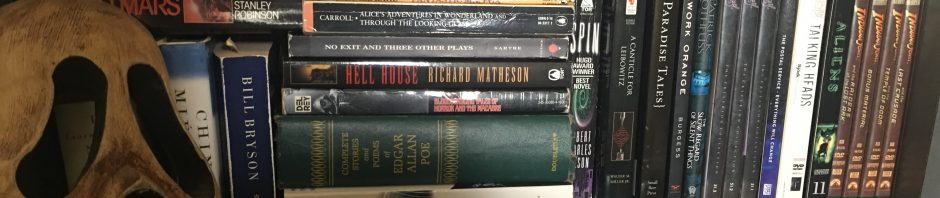
For example, I love hard boiled noir (see previous rant-y bit), things that have Alice-in-Wonderland or Hitchhiker levels of absurdity, really well done survival horror (like Alien), emotionally manipulative camera lens gazes (Psycho), deep character studies (Moon), tightly structured stories with no gun left unfired (Attack the Block/Edgar Wright movies), one-liners (Woody Allen movies), etc. You can take any two of those things and write a story that, if well-crafted in terms of skill (characterization, pacing, grammar, etc.), would blow me away. And you could take any other two things and write another story that is completely different in terms of tone, style, tropes, etc., and still blow me away. I have no set formula for the things I like. I’ll know it when I see it.

And that’s where the gray area between skill and taste becomes important – where you know enough about the elements you like that you know the expectations a reader has with those elements; and maybe also what ways those expectations have already been played with if you’ve delved deeply enough into it; and then you play with them further, or parody them, or go in a completely different direction, or explore the overlapping region it could have if you mashed it up with an entirely different element with it’s own history of tradition.

There’s a difference between a story that includes the right elements (to appeal to a particular editor) and executing extremely well, just not in an original way, and a story that includes the same extremely well-executed elements, but in an original way. One tickles more than the other.

So that’s my rant. I guess the tl;dr version is that getting short fiction published (or any kind of art, really, in front of a wide audience) depends both on how many hours you’ve put your butt in the chair AND luck. But the odds on the latter get better if you’re submitting stories to the kinds of markets where the current editor has a track record of publishing stories you love.

And you read them again because you loved them so much. And then you sit down and start to try to figure out how they managed to do to ou what they did to you, so you might, at some point in the future, do that to someone else.

Because I mean, really. That’s the entire reason we submit ourselves to this frustration – to discover truth and to share that with others in the hopes you can change someone else for the better like your favorite author changed you.

Because we’re still grateful, all these years later, for the things they left behind.

[I know this is not exhaustive – it’s not meant to be. But now I’m exhausted. So it’s likely I dropped some discussion threads I was gonna come back to. But it’s long enough as it is.]
Posted in Process Geekery, Writing | 1 Comment

Shake It Out

I have been REALLY good lately about dropping the ball. I’ve blown through deadlines (both external AND self-imposed) with a gleeful abandon, much like if I were doing a steeple chase with my arms thrust back like an airplane, sprinting forward with my eyes closed.

As such, I’ve been pissing myself off a lot more than usual. And when I get on an irresponsible tear as wide and non-productive as this one has been, I EXCEL at pissing myself off. It’s been so easy lately – particularly since I got my head back on straight – with so many new distractions, I’ve reached my threshold of pissed-ness.

Understandably, I’ve been starting to think about what I need to work on. I know how and why I’m broken, but I’ve been too scattered and lazy to bother fixing things. And since it’s getting to be that time of year again, where I start taking stock of the past year, and where I start thinking about the content and quality of the upcoming year, now’s the time I feel compelled to start pulling my shit together again.

At the beginning of this year I made a promise to myself to try and make 2012 better than 2011, and in that regard I’m declaring 2012 a massive success, despite my end-of-year-dithering. There were a lot of firsts for me. I wrote a bunch of new fiction, started slush reading for an awesome magazine, made new friends, caught up with old friends, got into the best shape of my life, and relearned how to be alone and happy. Twice. I went to Seattle for the first time and the Rainforest Writer’s Retreat, I went to Wiscon, Readercon, and Worldcon. I read a bunch of good fiction (though not as much as I would have liked). I sold a story and saw my very first story in (e-)print. I got to play music. On stage. With an audience. I was inspired, I was distraught, I was distracted and vulnerable and invincible and unstoppable and weak and broken and ecstatic, joyful, tearful, wistful, satisfied, disappointed and content.

2012 became the year of purposefully moving beyond beta. Sure, there was misery and self-doubt and the periodic flaring of neuroses I’ll always be carrying, but misery dilutes easily when stacked up against so much joy, so many things I thought, even one year ago, I would never do. And though, presently, I am angry with myself for falling so far behind on so many things that are important to me, I know this will pass and I will find my footing again. I know this because I’m giving myself the same invocation as last year:

I will make 2013 even more awesome than 2012 was. I will make new art; write new stories. I will record the first album with my band. I will meet new people. I will play more music. I will laugh long and hard. I will read new books. I will run farther and faster and delight in having worked hard on to be able to do so. I will be inspired, I will be distraught, I will be distracted and vulnerable and invincible and unstoppable and weak and broken and ecstatic, joyful, tearful, wistful, satisfied, disappointed and content. Because what is a year that doesn’t include at least that much?

I’m excited for what the new year will bring; for what new twists, joys and miseries await me. And I’m gonna run straight for them, head thrown back, eyes closed, arms straight out like I’m flying.

Why? Because fuck fear. That’s why.

Be fearless. Say yes. Go after the things you want. Be the person you want to be. Make the art you want to make. And when you fail, as we all do, you’ll be all the better for it because there is no growth without failure.

I hope your 2013 is exactly what you need it to be.

Posted in Errata | Leave a comment

The obligatory thanksgiving post

As it is a holiday, it stirs the retrospective junky in me. This has been a helluva year so far, for so many different reasons. So here are my thanks:

For my friends, new and old, who’ve helped me to laugh and cry with them, as appropriate; for those once near who are far, know I love you, even if I’m terrible at regular correspondence. My deepest thanks for all of your love and support. I couldn’t do any of this (and I mean any of this) without you guys.

For my family, who never stopped believing in me, despite me following whatever wind caught my fancy, and the resulting periods of severe self doubt that inevitably followed.

For my day job and my health; if it weren’t for the one, the other might have remained out of reach.

And finally for chaos. Sometimes I feel like I can see what the rest of my life is going to be like, but then chaos intervenes and changes everything. Changes me. And I wouldn’t trade this life, the ups and the downs and the valleys in between, for anything.

To all the agents of chaos out there (you know who you are),

All of my love and affection –

Kelly

Posted in Errata | 2 Comments

I’ve So Much Past Inside My Present

I’m home sick from work today with vertigo.

Vertigo sucks. I’ve had it once before – it started after I finished recovering from a particularly nasty bout with the flu a few years back, and it stuck around for a few days. I’m hoping since the precursor illness to this one wasn’t nearly as bad, this will clear up quickly. We’ll see. In the meantime, there will be no running, no yoga, no driving, and lots of alternating between sitting and lying down to stop the spins. It’s frustrating to not be able to trust yourself enough to even just walk across a room.

Anyway.

The big news is that my first short story, “How to Make a Triffid,” went live on the Tor.com website yesterday, and I’m absolutely thrilled. I blogged about the story behind this story a while back, so I’m not going to go into that again, but I did want to write a little bit about a conversation I had with a friend of mine a few weeks back, since it’s been on my mind lately, and hitting the Writer Landmark of first story publication, it’s apropos.

The question came up about how we expect we should feel after we cross these big artistic thresholds – how there should be this seachange after these goals we strive towards for so long are accomplished. I mean, we are objectively changed at that point, right? At least as far as objective categorization goes, and as far as the opinions of others outside of our field are concerned (this is particularly apt with so many of us facing down Thanksgiving dinners with family in the coming week). I mean, now I’m a Published Author, right? I’m magically in the club of the Writers with the capital W’s. It’s something I’ve been working towards for years now, so I should feel like everything has changed, right? Like I now have permission to pursue my art with abandon because of this validation?

But I don’t feel any different. I still struggle to put my butt in the chair – there’s been no discernable, lasting increase in my confidence in myself between selling this story last year and it being published. In fact, the act of writing has become harder simply because the standards I’m holding my writing to have risen. Don’t get me wrong: it’s good to have our standards exceed our skill level – this ensures that we’re always striving to improve our craft. But when the gap becomes too large, we risk artistic paralysis. Due to a number of personal reasons I’m not going to get into, I’ve been struggling with this lately.

It brings to mind one of the lessons we learned at VP about internal and external markers of success: how our landmarks should be the ones we have control over (like writing every day, finishing stories, etc) and not the ones we don’t (story sales, award nominations, etc.). That is the essence of art, after all – it’s something deeply personal, an expression of the world we carry within ourselves. Audience shouldn’t matter. Validation should come from within.

But I’m not fooling anyone when I say that someone telling you they liked your story doesn’t still feel really fucking good, and that someone telling you they hated it stings.

I dunno. It’s a weird thing, these landmarks. It’s like we think that the “striving” will suddenly become “doing”, and that there’s a difference between the two. But there’s not. And really all of this is because we’ve crossed the threshold of only showing our art to our friends and peers to showing it to complete strangers.

But is that really going to change your actual process and how you feel about it? If anything, it can make it harder, and that added difficulty is wrapped in layers of pointless anxiety and stress about controlling things that we can’t control.

Recently my (awesome, amazing, humbling, inspiring) writing group critiqued one of my trunk stories from a few years ago. It was enlightening. I could still remember how I had felt when I finished writing that story, the pride I had in it, how I had thought it was best thing I had written. But seeing it again, comparing it to how I write now, it’s not. There are mistakes in there I don’t make anymore (or at least that I make less frequently). I don’t even approach writing short stories in the same way anymore. I’ve gotten better at it.

That’s a difference I can feel. That’s the difference that matters.

On an somewhat related note: go read The Oatmeal’s latest post on making things. He speaks the truth.

Posted in Process Geekery, Viable Paradise, Writing | 2 Comments

The Next Big Thing

Wonka sees through all your fizzy lifting smoke and snozzberry-sheened mirrors

Fran Wilde tagged me in her Next Big Thing blog post, which means I have to talk about my WIP, then tag other authors and ask them to talk about their WIPs. I’ve had a certain work in progress for quite a while now, so I’ll be writing about that. I won’t be tagging anyone else, though, just because it seems like most of the people I would have asked have already done one of these. But don’t let that stop you from going back to Fran’s post and checking out the other authors she’s tagged. I’m in august company.


Ten Interview Questions for The Next Big Thing

1. What is the title of your Work in Progress?  

Abaddon Abandon (working title)

2. Where did the idea come from for the book? 

I was lying in bed one night, frustrated with grad school. My mind was wandering around, not letting me sleep, so I started thinking about what would happen if humanity were to come to the end of scientific understanding as we know it. One thought led to another (as they’re wont to do) and I wound up coming up with the particular incarnation of the afterlife that’s the primary setting of Abaddon Abandon.

3. What genre does your book fall under?

I’m not sure. I’ve been really fond, lately, of mashing up fantasy and science fiction – taking fantasy tropes and bending them to fit in a system built out of scientific rigor. Kind of like Star Wars. With dead people. So Urban Science Fantasy?

4. Which actors would you choose to play your characters in a movie rendition?

Noomi Rapace as Maura, Stand By Me-era Jerry O’Connoll as Fig, Gary Oldman as Gilbert, Donald Sutherland as Sam and some no-name up-and-comer as the main character, Ambrose.

5. What is a one-sentence synopsis of the book? 

Ambrose, stuck in the afterlife after his purgatourist trip goes wrong, struggles between letting go and holding on when he discovers there may be a way to get his life back; but the only way out is through the heart of a war that’s been brewing between the Center and the Rend, a war in which Ambrose doesn’t yet know he plays a central part.

6. Will your book be self-published or represented by an agency?

Once I finish this next round of revisions, I’ll be seeking representation.

7. How long did it take you to write the first draft of the manuscript? 

I wrote the very first draft over the course of three months when I first started writing again back in 2008. As my writing has improved since then, I decided to do a complete rewrite and completed the second draft between November 2011 and March 2012. I anticipate the next round of edits to take me until at least the end of the year.

8. What other books would you compare this story to in your genre?

I’m going to veer off the tracks on this one and say there are actually more apt movie comparisons for this one – it’s one part Eternal Sunshine of the Spotless Mind, one part Dark City.

9. Who or what inspired you to write this book?

Grad school, primarily. It’s an ode to how I felt for much of my 20’s – of feeling lost when you think you should have found yourself already, and the terror you feel when you look into the future and see nothing there.

10. What else about your book might pique the reader’s interest?

I still get excited when I think about the world and the rules I’ve laid down for it. I’m not going to go into specifics, but one of my favorite things in the book is Sam’s library – it’s infinite and shifting, and is comprised of books without words and everything in his life he at one point had found meaning in.

Include the link of who tagged you and this explanation for the people you have tagged.

Fran Wilde tagged me. You should go check her out (especially her Cooking the Books interviews – they’re RAD), and also follow her on Twitter (@fran_wilde).

As I’m not tagging anyone, I’d like to instead give shout outs to my writer’s group (who are amazing and make me kick my own ass into gear, even when I’ve got the squirrel brain and dontwannas); my Viable Paradise teachers, staff and classmates (there was life before VP, and there was life after VP – and the sea change in my writing and habits and priorities and life has come about in small, incremental ways); and the crew at Apex Magazine for letting me slush for them (it’s made me a more thoughtful writer in a lot of different ways).

Posted in Viable Paradise, Writing | 8 Comments